

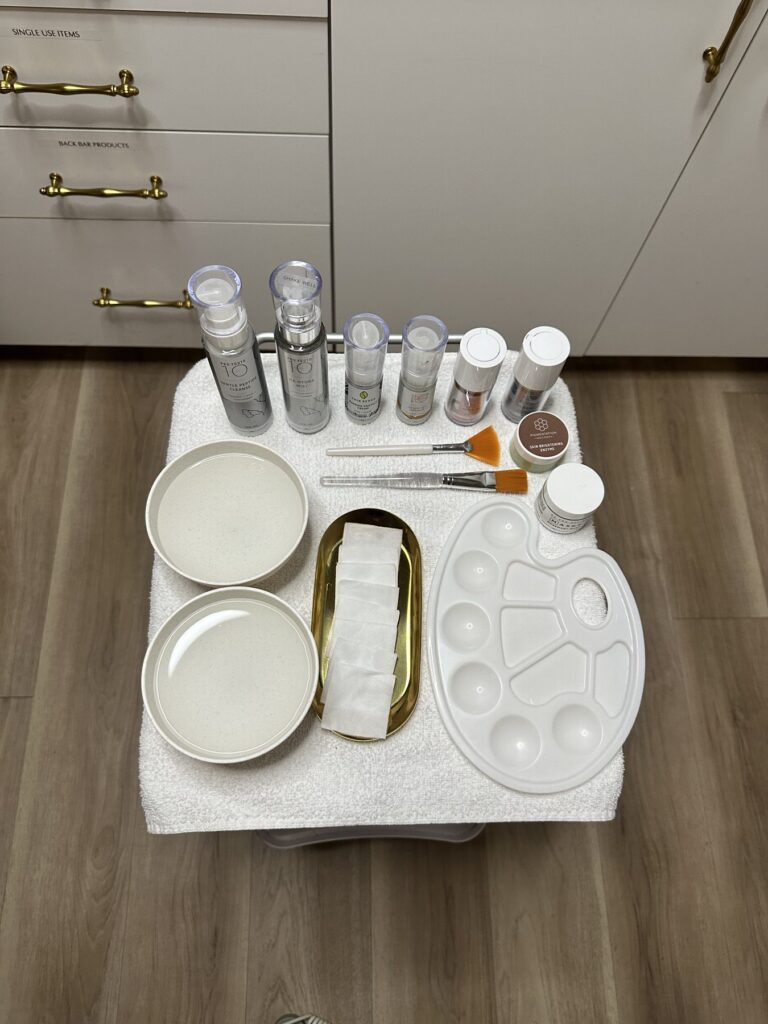
A chemical peel is one of the most effective ways to brighten dull skin, fade dark spots and smooth rough texture. But “chemical peel” covers a wide range, from a gentle lunchtime refresh to a deeper peel that leaves you flaking for a week. Choosing the right one for your skin, and your calendar, makes all the difference.
How a chemical peel works
A peel is a carefully chosen solution of acids applied to the skin for a set amount of time. It loosens the bonds between dull, damaged surface cells so they shed faster, revealing fresher skin underneath. Deeper peels also encourage new collagen. The strength of the acids, and how long they stay on, determine how deep the peel goes and how much peeling you will see.
What peels are good for
- Sun damage and dark spots, very common in Arizona
- Marks left behind by breakouts
- Uneven tone and dullness
- Clogged pores and breakout-prone skin
- Rough texture and fine surface lines
Peels are not the right tool for loose skin or deep wrinkles. For those, treatments like XERF skin tightening or wrinkle relaxers usually make more sense, and we will tell you so.
Light, medium and deeper peels
Light peels use gentler acids such as lactic, glycolic or salicylic acid. You may see a little flaking for a day or two, or none at all. They are ideal for a quick glow, for congested skin, and as maintenance between other treatments.
Medium-strength peels, like the Perfect Derma Peel we offer, combine several active ingredients and are designed for pigmentation, sun damage and uneven tone. Peeling usually starts around day two or three and lasts several days, and the result is a noticeably clearer, more even complexion.
We also offer professional peels from the AlumierMD and Rhonda Allison lines, which let us match the formula closely to your skin type and concern.
Which peel is right for your skin?
- Dull or tired-looking skin: a light peel, often in a short series
- Breakouts and congestion: a salicylic acid-based peel
- Dark spots and sun damage: a medium-strength peel, sometimes after a few lighter ones
- Sensitive skin: a gentle formula first, building up as your skin tolerates it
Your provider will look at your skin, ask about your skincare and any medications, and recommend a starting point. We would always rather start gently and build than start strong and have to manage irritation.
What to expect on the day
Your skin is cleansed and prepped, then the peel solution is applied. Most people feel tingling or warmth that builds for a few minutes and then fades once the peel is neutralized or removed. Tell your provider if it feels uncomfortable; we can adjust. The appointment is usually under an hour.
Planning around peeling
With a medium peel, plan around a few days of visible flaking. Do not pick or peel the skin, keep it moisturized, and use the products recommended for you. If you have an event coming up, book your peel at least one to two weeks beforehand so your skin has fully settled.
Sun protection matters even more in Phoenix
Freshly peeled skin is more sensitive to the sun, and our sun is intense. Daily broad-spectrum sunscreen, a hat and avoiding direct midday sun for the first week help protect your results and prevent new pigmentation. Many patients like to do their deeper peels in the fall and winter.
How many peels will I need?
A single light peel gives a quick glow, but most concerns improve best with a series, typically three to six peels spaced a few weeks apart. Pigmentation in particular fades gradually. Your provider will give you a realistic plan at your consultation rather than after your first peel.
Ready to find the right peel for you?
Book a consultation or call (602) 834-4234. You can also learn more on our chemical peels page.
Results vary from person to person. This article is for general information and is not a substitute for a medical consultation.